NGFF vs NVMe Explained: Modern SSD Storage Differences Guide
InfoNest Team
January 25, 2026
396 views
What You Need to Know About the Differences Between Modern Storage Technologies: NGFF vs. NVMe
nvme-vs-ahci-architecture-explained(3)Begin
When you were shopping for an SSD or checking inside a new laptop or desktop, you could have noticed the words "NGFF" and "NVMe." And if you were a little confused, don't worry—you're not the only one. People use these two words a lot in tech forums, product listings, and YouTube reviews. Even though they are very different, they often mean the same thing. It's like comparing the shape of a bottle to the type of drink it holds. Doesn't it sound weird? But that's what happens when you put NGFF and NVMe together.
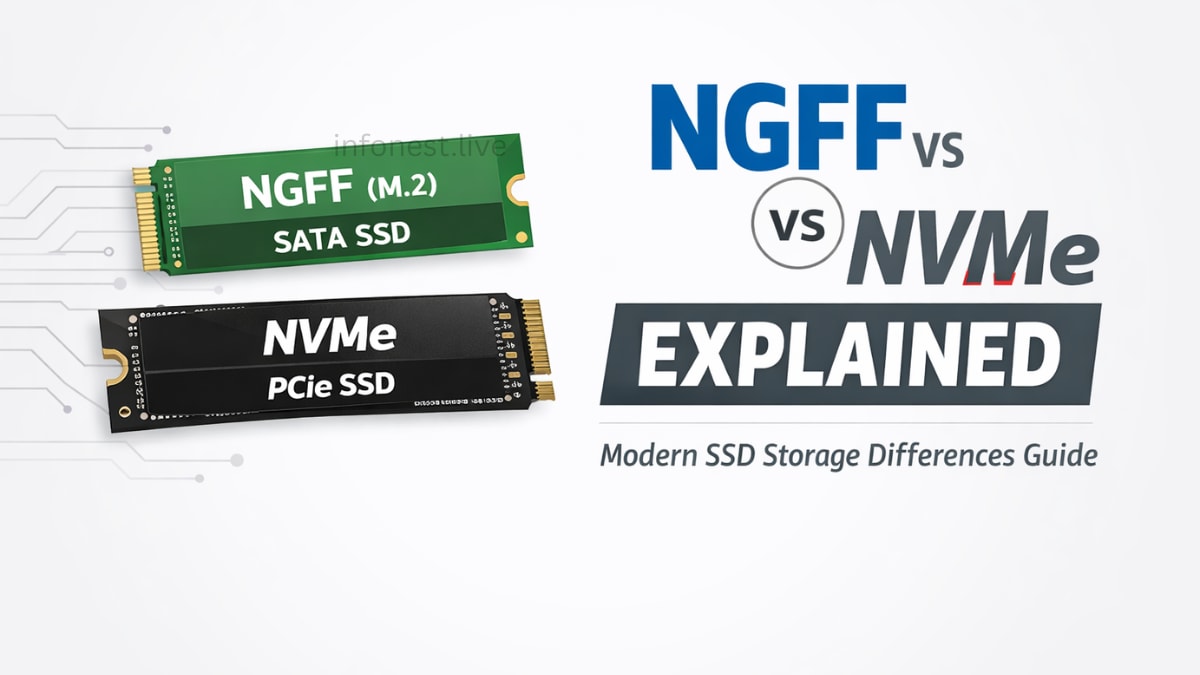
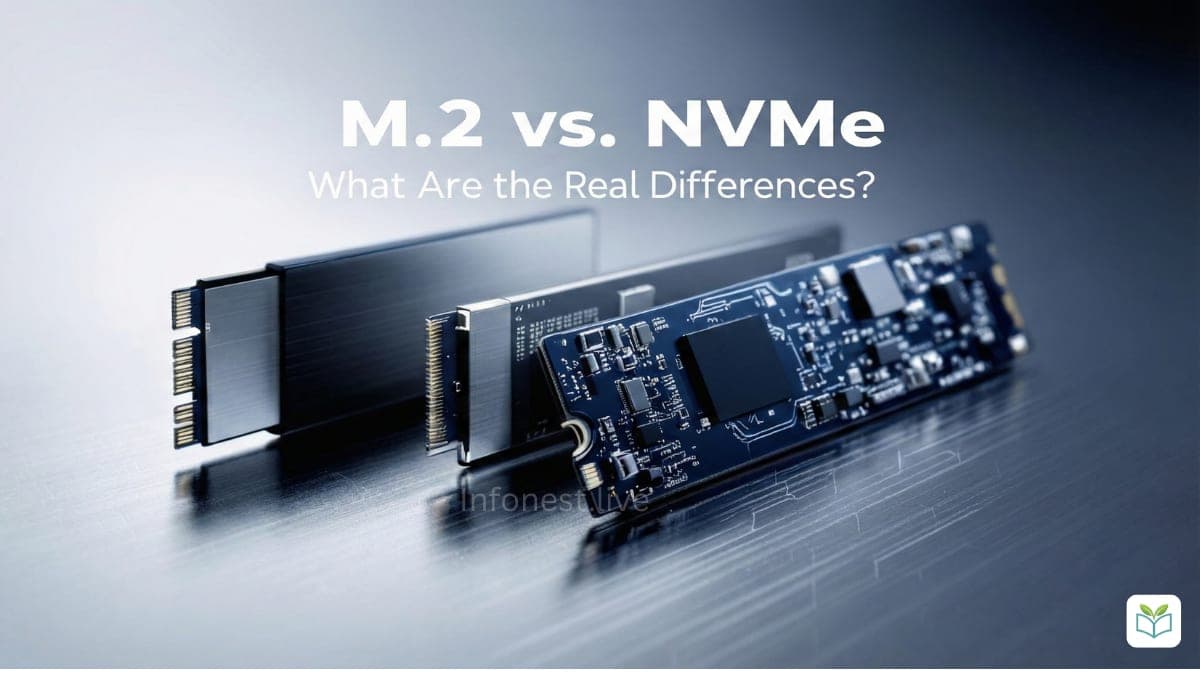
NGFF (now often called M.2) is a type of form factor, and NVMe is a sort of storage protocol. One informs you how a drive looks and how it connects to other devices, and the other tells you how data is transmitted at lightning-fast speeds. It's vital to know the difference, especially whether you're upgrading your computer, building a new one, or just trying to find the best deal. (See also: M.2 vs. NVMe Real Differences.)
It's not enough to just have a lot of storage space anymore. In today's world of fast boot times, large games, 4K video editing, and multitasking, the speed of your storage can significantly impact your experience. If you choose the wrong type, you could lose a lot of performance or, even worse, buy something that doesn't even work with your system.
In this in-depth look, we'll explain everything in simple terms. No unnecessary jargon. No unnecessary things. We will provide a basic, clear explanation of NGFF and NVMe, highlighting their differences, demonstrating how they work together, and identifying which one is more suitable for your needs. Let's get started.
Getting to Know the Basics of Modern Storage
Before we look at how NGFF and NVMe are different, let's talk about how we got here. Storage technology has developed quickly—faster than most people realize—and each modification was made to suit one fundamental need: speed.
These Interfaces Work With NGFF
NGFF (M.2) is challenging to grasp because it can work with multiple interfaces. Because of this flexibility, you can't determine how effectively a drive functions just by looking at its size or shape. Two M.2 drives may look similar on the surface, but they may perform very differently on the inside.
SATA Drives for NGFF
Some NGFF (M.2) drives have the same SATA interface as ordinary SSDs that are 2.5 inches wide. These drives were only supposed to be a short-term solution.
Key Characteristics
The quickest speeds are around 550 MB/s
Works with the AHCI standard
Not as costly as NVMe
Compatible with many older systems
These drives are useful for people who don't use their computers very often, for corporate PCs, and for older laptops that have M.2 ports but not NVMe.
PCIe-based NGFF Drives
This is when things start to get intriguing. NGFF can also function with PCIe-based drives, which are quicker.
Benefits
Speeds range from 1,500 MB/s to over 7,000 MB/s
Less delay
Better at doing more than one thing at a time
Designed to handle current workloads
When people say "NVMe SSD," they usually imply PCIe-based M.2 drives.
What Does NVMe Stand For?
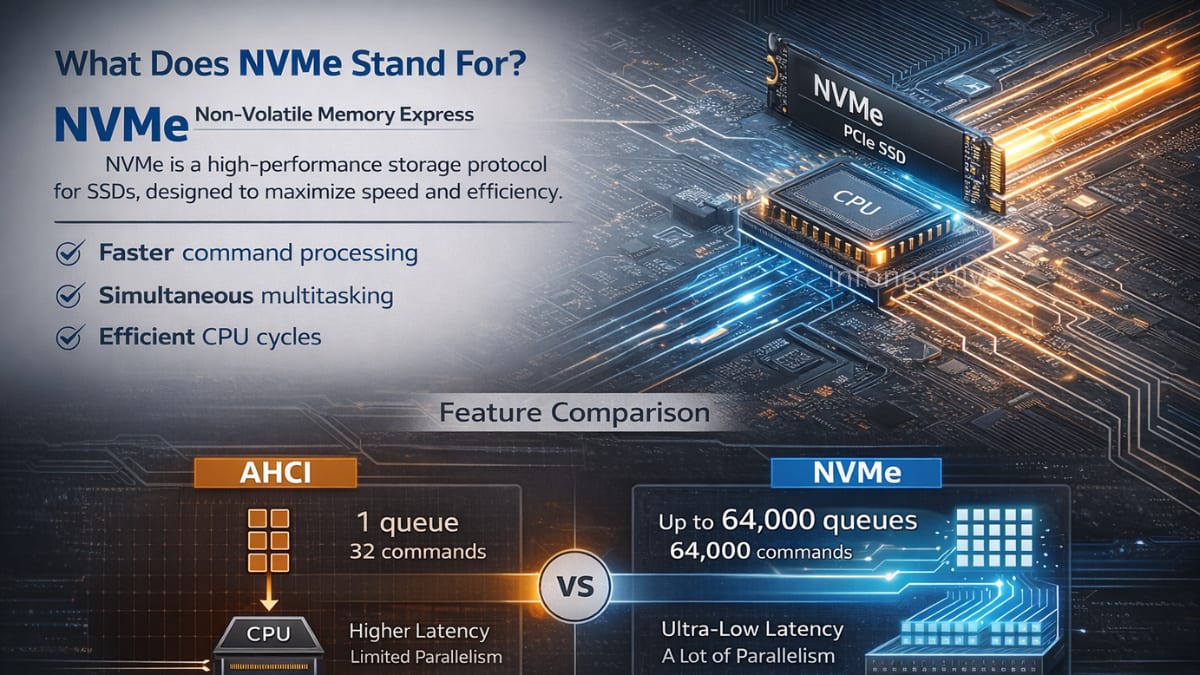
NVMe architecture compared with AHCI showing command queues, parallelism, and ultra-low latency storage communication.What Does NVMe Mean?
NVMe stands for Non-Volatile Memory Express. NVMe is not a type of form factor like NGFF. It's a way for SSDs to talk to one another about how much space they have.
What NVMe Is Used For
The main goal of NVMe is to get rid of slowdowns by:
Making it faster to send a command
Letting many things happen at the same time
Making each CPU cycle work better
How NVMe Operates
What NVMe Architecture Is
NVMe works with:
Up to 64,000 command queues
64,000 commands for every queue
AHCI only works with one queue that has 32 commands.
AHCI vs. NVMe Protocol
Feature Comparison
AHCI: Higher latency, limited parallelism
NVMe: Ultra-low latency, a lot of parallelism
How NVMe and PCIe Work Together
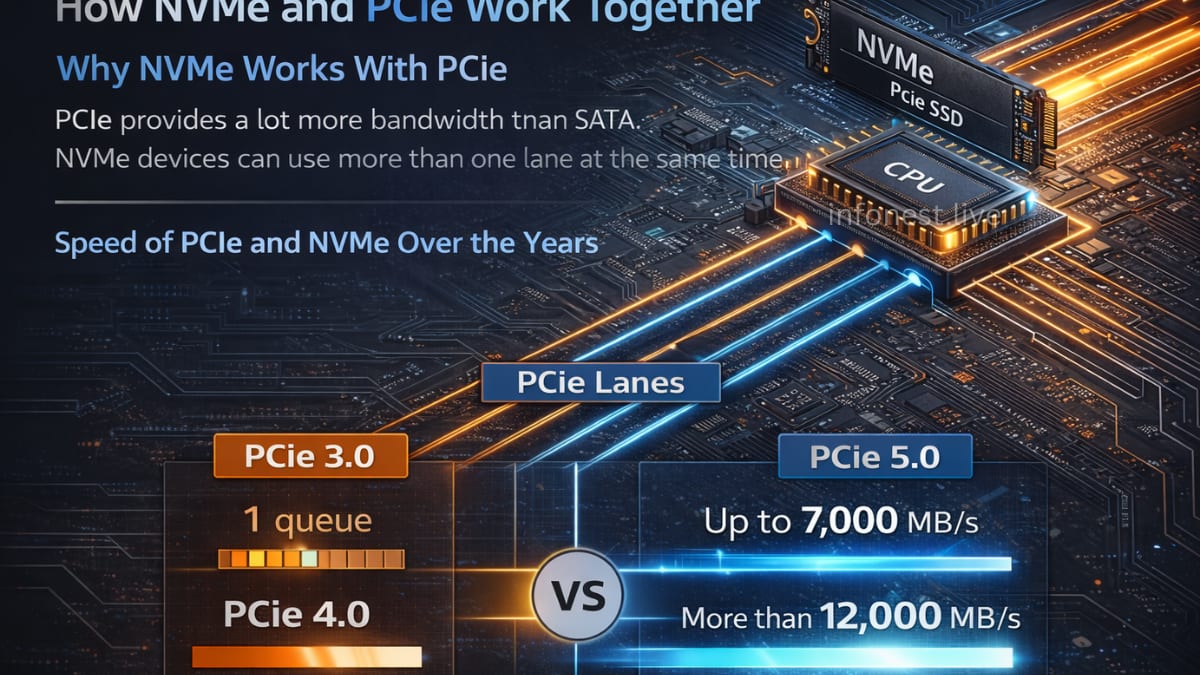
Diagram showing how NVMe SSDs use PCIe lanes for high bandwidth and faster data transfer compared to SATAWhy NVMe Works With PCIe
PCIe provides a lot more bandwidth than SATA. NVMe devices can use more than one lane at the same time.
Speed of PCIe and NVMe Over the Years
PCIe 3.0: Up to 3,500 MB/s
PCIe 4.0: Up to 7,000 MB/s
PCIe 5.0: More than 12,000 MB/s
The main differences between NGFF and NVMe are their form factor and protocol.
Form Factor and Protocol
NGFF (M.2) = Shape in real life NVMe = A technique for computers to talk to each other
They are not enemies. They help one another.
Comparing How Well Things Work
M.2 SATA SSD: Up to about 550 MB/s
M.2 NVMe SSD: 3,000 to 7,000+ MB/s
Asking "Which is faster, NGFF or NVMe?" is like asking if a USB port is faster than Wi-Fi.
Standards for Performance and Use in the Actual World
Order of Read and Write Speeds
NVMe is the best choice for moving large files and installing games quickly.
How Random IOPS Works
This affects:
How long it takes to start
Opening apps
Doing more than one thing at the same time
Compatibility and Use Cases
Ultrabooks and Laptops
Some older laptops only function with SATA-based M.2 drives, so compatibility matters.